- Year
- 2013
- Players
- 2–5
- Play time
- 100min
- Min age
- 13+
- Weight
- 2.99
- BGG rating
- 8.07
- BGG rank
- #29
- Best with
- 4
Board game
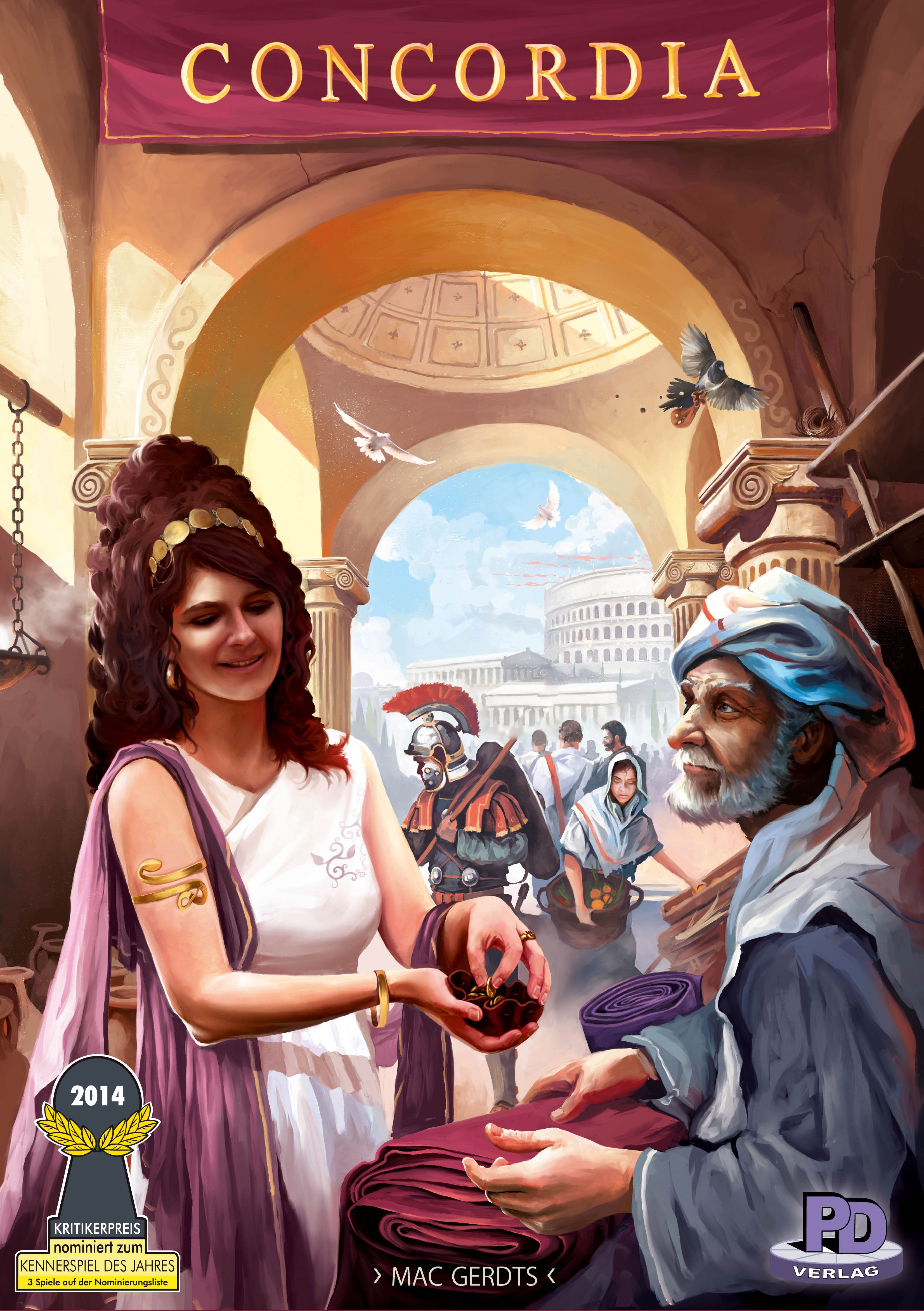
Concordia
Concordia: Sestertiusszal kikövezett utak
Designed by Mac Gerdts
MeepleMates notes for Concordia
Public snippets combine board game metadata with MeepleMates play history so visitors can evaluate the game for real group play and game night planning.
- Concordia is available as a public board game page on MeepleMates for group planning and collection tracking.
- Best with 4 player according to player poll data.
- BoardGameGeek average rating 8.07 and BGG rank #29.
- Groups use this page to connect Ancient, Economic, Nautical metadata with real play history, ratings and game night notes.
- Recommended player counts include 2, 3, 5.
Categories
Mechanics
Best with how many players
Community votes from BoardGameGeek
Language dependence
Moderate in-game text(56 of 85 votes)
Sub-rankings
- Strategy Game Rank#24
Videos
YouTube2

BoardGameGeek11
Review6

HOW TO WIN CONCORDIA, High Strategy Tips & COMEDY - I Teach Her She Wins
BoardGameGeek · elbirbo
English · Curated source

Concordia
BoardGameGeek · Melaniebarr
English · Curated source

Concordia
BoardGameGeek · Melaniebarr
English · Curated source

Booghy plays... Concordia(Hispania)(3p, Playthrough, Impressions)
BoardGameGeek · bogdani0405
English · Curated source

New to BGA: Concordia — Is It Worth Your Time?
BoardGameGeek · Digital_Board_Gamer
English · Curated source

Concordia (Review)
BoardGameGeek · rlphay
English · Curated source
Session1

Unboxing2


Other2


External data
Wikidata enrichment: 2 links · 2 facts · latest game data 07/26/2026.
Latest Wikidata run: ok · 09/12/2026.
Links
Facts
- Publication date
- 2013
- Publisher
- Cranio Creations